
Mold Testing in Pennsylvania and New Jersey

Thorough Mold Inspections with Mack's Mold Removal

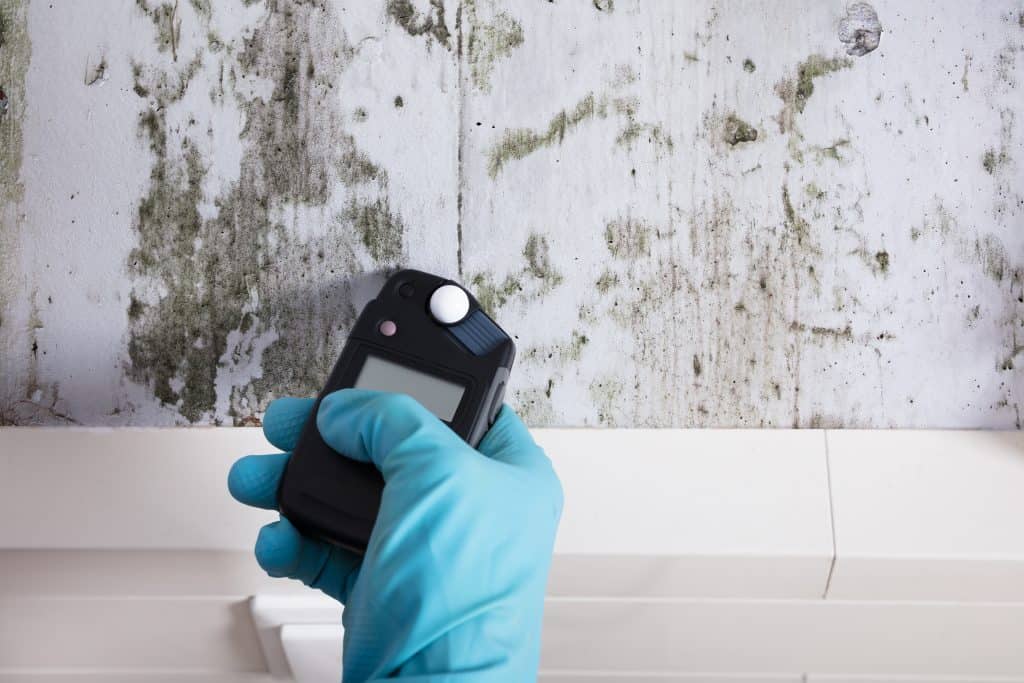
Hand wearing blue glove holding a digital moisture meter against a mold‑stained interior wall, testing dampness and water damage near a tiled surface.

Walk the property

Mack's tests across Bucks County, Philadelphia and the surrounding counties, and into New Jersey.

Mold only

Testing and remediation are the whole business here, not an add-on to a restoration menu.

Measured, not guessed

Samples are analyzed rather than eyeballed, so what comes back is a reading and not an opinion.

5.0 from 137 reviews

Every one left by homeowners across Bucks County and Philadelphia on the Google listing.

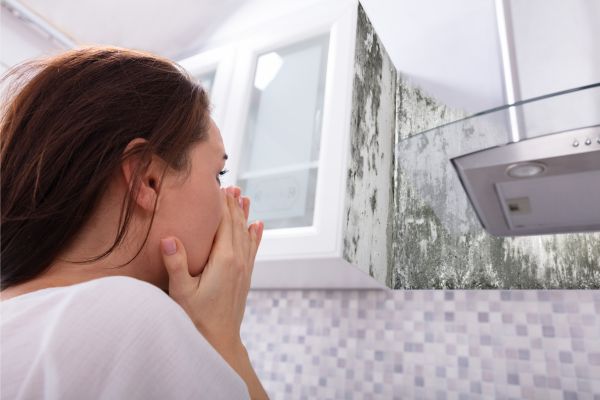
Girl holding her breath in shock after seeing mold growth in her house.

Mold testing in Bucks County and Philadelphia

You cannot identify mold by looking at it

There are thousands of mold species, and the ones that matter to your health look much like the ones that do not. Color is not a guide. Stachybotrys, the one people mean when they say black mold, is often dark green or grey, and plenty of harmless growth is jet black. Testing exists because the eye cannot tell you the species, the spore count, or whether what is in the air is worse than what is on the wall. Mack’s tests to answer three specific questions: what is growing, what share of it is airborne, and whether the level inside is higher than the level outside on the same day. What the results say then decides whether the next step is monitoring or remediation.

Hear from Our Customers

What mold testing tells a homeowner

The questions a test actually answers

What you learn from testing that looking cannot tell you.

Which species is present, from analysis rather than a guess at the color.

Whether the spore count indoors is genuinely higher than outdoors on the same day.

Whether growth you can smell but cannot see is in the air, the wall, or the ductwork.

How far it has travelled beyond the patch you already found.

Whether a musty smell after a leak is active growth or settled dust.

A baseline to measure against once the work is finished.

Black circular icon with the number 1 in white, minimal flat design symbol commonly used for step four, countdowns, rankings, or list indicators.

Share project details

Call us or get a free online quote to help us identify your project needs.

Black circular icon with the number 2 in white, minimal flat design symbol commonly used for step four, countdowns, rankings, or list indicators.

We'll follow up

If you requested an online quote, you can expect a callback within 24-48 hours of your request.

Black circular icon with the number 3 in white, minimal flat design symbol commonly used for step four, countdowns, rankings, or list indicators.

The floor is yours

Connect with an expert and share all project specifics.

Black circular icon with the number 4 in white, minimal flat design symbol commonly used for step four, countdowns, rankings, or list indicators.

Plan your project

Like what you hear? We'll provide next steps and expert guidance.

A person in a white hazmat suit and gloves holds a spray bottle with a red nozzle, aiming it forward. The background shows a beige corner of a room with a ceiling, reminiscent of the careful precision used by hardscaping contractors during patio installation projects.

Black mold vs mildew and how to tell them apart

The difference you can actually see

Mildew stays on the surface. It is flat, powdery, usually white or grey turning brown, and it wipes off a shower tile without leaving a mark. Mold has depth. It looks fuzzy, slimy or raised, it comes in green, brown, black or grey, and it has already put roots into whatever it is sitting on, which is why wiping it leaves a stain behind. That surface-versus-rooted difference is the useful one, because it tells you whether you are cleaning or removing. What it will not tell you is the species. Stachybotrys is frequently dark green rather than black, and several harmless growths are darker than it is, so the visual check stops at this is mold, not mildew. Anything past that needs a sample, which is where a mold inspection starts.

Air sampling and surface testing for mold

Two tests that answer two different questions

A surface sample tells you what is growing on one specific spot. An air sample tells you what you are breathing, which is the part that matters when the growth is behind a wall or inside the ductwork. The two often disagree, and the disagreement is informative: a clean wall reading with an elevated airborne count usually means the source is somewhere nobody has looked yet. Air samples are also read against an outdoor control taken the same day, because spore levels move with the weather and an indoor number on its own means very little. Which test you need depends on whether you are confirming a patch you can see or chasing a smell you cannot place, and on whether the finding is heading toward mold removal.
A Person wearing yellow gloves removing mold from a wall.

Areas We Serve

Black circular icon with the number 1 in white, minimal flat design symbol commonly used for step four, countdowns, rankings, or list indicators.

Walk the property

We look at where the moisture is, not only where the staining is, because the visible patch is usually downstream of the source.

Black circular icon with the number 2 in white, minimal flat design symbol commonly used for step four, countdowns, rankings, or list indicators.

Take the samples

Air and surface samples are collected with an outdoor control taken the same day, so the indoor reading has something real to be measured against.

Black circular icon with the number 3 in white, minimal flat design symbol commonly used for step four, countdowns, rankings, or list indicators.

Read the results

You get what was found, where it was found, at what level, and whether that calls for remediation or for monitoring.